Saturday, May 05, 2018


A blue image of mitochondriaThe University of Colorado* at Boulder recently reported on their study** results about a new, innovative ​antioxidant. They titled their report, "Novel antioxidant makes old blood vessels seem young again", which certainly grabs the reader's attention. Who wouldn't want to have blood vessels that seem younger? 


Their work demonstrates that pharmaceutical-grade nutritional supplements (nutraceuticals), could play an important role in (possibly?) preventing heart disease. Passive language is all the range in medical literature and one must presume that it's based on a fear of actually making claims that may not be true. The report and the study both look more like a trial balloon than documenting a scientific breakthrough in health. If the stories generate interest, the authors will want to continue their work - taking it to a final marketable product. The published reports substantiate claims about who is first to discover the new approach.

That's enough back story. The more important part of this whole story is a few lines that appear toward the end of the report from CU Boulder;
“Exercise and eating a healthy diet are the most well-established approaches for maintaining cardiovascular health,” said Seals, a professor of integrative physiology. “But the reality is, at the public health level, not enough people are willing to do that. We’re looking for complementary, evidence-based options to prevent the age-related changes that drive disease. These supplements may be among them.”

One must wonder if the authors meant that their findings are great news for everyone who wants "younger" blood vessels - or ones that “seem” younger. Furthermore, there’s a powerful indictment in that short quote. The fact remains that a healthy diet is the best approach to good heart health. Sadly, few people "...are willing to do that." Therefore, according to these reporters and many others, we need research to discover extracts and laboratory chemicals that will make us seem healthy regardless of how poorly we eat.

It is important to note another veiled proclamation, that they are promoting a "pharmaceutical grade" substance, which means it is likely to be patented and sold as a drug - most certainly called a nutraceutical to further mask the fact that it is made in a chemistry laboratory in some country outside the United States. Image is vital and using “neutra…” presents a healthier image than “drug” or “chemical”. It “seems” natural.

So, is there something inherently wrong with medical patents? Of course not, particularly when the patent is the legitimate method for protecting the interests of the inventor. While is isn't possible to patent a natural substance (no patented dried foods or vitamins), big drug companies (and their cohorts in the education world) are skilled at devising unique ways to extract or manipulate natural substances into  products they can patent. That means they will control manufacturing, distribution, and prices for the life of their patent protection (in the neighborhood of 20 years).

Too few people will eat well - according to this study and report - and we've all witnessed the same thing, and are probably just as guilty as the next person, meaning that huge numbers of us will likely buy the next prescribed innovation because it’s easier to pop a pill than to buy and prepare good food. In addition,  somebody else, the government or the insurance company,  will usually help pay for prescription drug (nutraceuticals). What many people refuse to acknowledge is that nothing is free and that insurance (private or government) doesn’t pay for anything. Instead, the citizens and/or subscribers put in their money that the third party system uses to pay for their prescriptions. It's the system. It's popular. It’s unlikely to go away anytime soon.

------------------------------------------------------------------------------------------------------------------

*https://www.colorado.edu/today/2018/04/19/novel-antioxidant-makes-old-blood-vessels-seem-young-again

The study itself was published in the American Heart Association journal, Hypertension.
**http://hyper.ahajournals.org/content/early/2018/04/13/HYPERTENSIONAHA.117.10787


Thursday, December 04, 2014

The Medical Marijuana Oxymoron


The Eighteenth Amendment to the U.S. Constitution took effect January 17, 1920 and was repealed by the Twenty-Third Amendment on December 5, 1933. During those 5,071 days of Prohibition, citizens found innumerable ways to obtain the adult beverages they fancied.

The more infamous efforts were criminal, usually resulting in mayhem. Yet there is one aspect of the alcohol ban that gets scant attention today because it wasn’t as exciting as the raids and police chases.

“Medicinal Alcohol” became a fashionable remedy, prescribed by doctors and dispensed by local pharmacies. Our twenty-first century version is “Medical Marijuana” – different substance, same conversation.

For most of the 1920s, a person could easily obtain a prescription for one pint of liquor every 10 days. All it took was cash — about $3, the equivalent of about $40 today — placed in the hand of an agreeable doctor. It cost another $3 to $4 to have it filled at the pharmacy.

Initially, the American Medical Association (AMA) rejected the use of alcohol for any health purpose. Practitioners involved in the prescribing and selling of “medicinal alcohol” experienced more vibrant practices while those who resisted found themselves less successful.

The December 3, 1921 issue of the AMA journal (JAMA) notified members that they would be receiving a survey on the use of alcohol. Half of the members, around 20,000, were polled. The JAMA article stated, “It is the duty of every physician who receives this questionnaire to express his opinion.”

By survey, not scientific testing, the AMA discovered no less than 27 conditions that benefited from alcohol use including diabetes, cancer, asthma, snake bite, lactations and “old age”. This speedy discovery prompted the AMA to issue their 1922 "Referendum on the Use of Alcohol in the Medical Profession", asserting their 1917 resolution against alcohol no longer had scientific value - so much for evidence-based medical practice.

“Medicinal" booze was perfectly legal – and supported by the powerful AMA. To some, though, it also made a mockery of the law, debased the dignity of the medical profession and encouraged rampant criminality, as mobsters eventually and inevitably took over much of the medicinal market.

What finally straightened out the liquor business was the legalization that came with the repeal of the Eighteenth Amendment in 1933, accompanied by a coherent and effective set of enforcement laws, a healthy boost in tax revenues and an honest recognition that, all too often, "medicinal" had been a cynical euphemism for "available."

In the first year after the repeal the federal government coffers were enriched by over $300 million (over $4 Billion today).

That brings us to modern legalized “medical marijuana”, a clear source of concern among politicians and the public in general. Focusing on the medical aspects of “the weed” and creating layers of
legislation to control it is a sham, as the honest objective should be legalization. Yes, legalizing marijuana will pose problems, but none more onerous than those presented by alcohol use. No, marijuana isn’t the gateway to harder drugs.

Rather than playing word games, shouldn’t we respond as thinking adults and advance means to control marijuana use – and “enrich the coffers” as an added gain?

We succeeded with alcohol almost a century ago. Writer Malcolm Gladwell defines tipping point as “the moment of critical mass, the threshold, and the boiling point”. That point is here and there seems no better time to act. We can remove the issue from our collective plate and address more pressing issues.

Thursday, November 13, 2014

Cold Hands and Feet?

Following a (trap shooting) match on a chilly October afternoon,
Jim and Jimmy shook hands. Jimmy commented that Jim’s hand was warm – despite the fact he didn't wear gloves. Jim replied that he takes cayenne pepper (active hot ingredient is capsaicin) once or twice daily.

I recalled that Cayenne pepper has a long history as a supplement support for cardiovascular and digestive health. For those who’d like more details about the reported benefits of cayenne (capsaicin) see Webmd.com for an extensive list of possible uses.


There’s a powerful sinus relief nasal spray (Sinus Buster) that is also known to quickly relieve headaches, even migraines.  I've used it often and can attest to its effectiveness. There’s a sharp initial burn that quickly subsides. The innovator of the product was a self-defense teacher who accidentally got a blast from a pepper spray during a demonstration. He reports that his migraine disappeared almost immediately after inhaling the pepper. That experience led him to develop and market the Sinus Buster product. The Compounder has stocked it for many years.

These pieces of data led to a simple experiment with someone who seems to always have cold hands. Ingesting cayenne pepper with meals is easy and it seems to be effective at raising the temperature of her hands. While I wouldn't claim that using cayenne would work for everyone, it certainly seems like a reasonable idea. Cayenne has a long history of safe use. The main warnings are about getting it in the eyes (people who use cayenne pepper in a topical cream should be particularly careful).

The Compounder stocks capsule form of Cayenne Pepper, 500 mg capsules.

It isn't expensive and it might work. 
An alternative is to eat more hot peppers.
Would you opt for the capsules or a few plates of heat daily?

Friday, November 07, 2014

Is Vitamin D a Fad?

I receive numerous health articles every week. As expected, the topics vary widely from acne
medicines to zinc deficiency. In the past few weeks, though I've noticed a steady stream of articles that declare the benefits of vitamin D and point out the many problems that can occur when our vitamin D levels are too low.

Interest in Vitamin might be a coincidence or a reflection of writing that gravitates toward a popular topic - a fad. It is also possible that research and study is pointing to a valuable lesson, that vitamin D (actually a seco-steroid, not a true vitamin) is one of the most important substances in our body.

We make vitamin D ourselves - and we can adsorb it in foods and supplements (the D3 form). In addition to recognizing how valuable it is, we must investigate why so many of us are sufferiong from the effects of a deficiency.

The basic issue seems to rest with two health theories that scare us into action. 

  • One, cholesterol is bad for us. 
  • Two, sunshine can cause cancer.

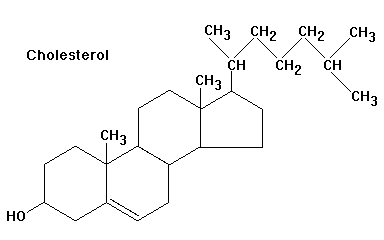
The fact remains that we make vitamin D in our skin through the interaction of cholesterol with sunlight. Making every effort to lower our cholesterol levels and avoid the sun might be exerting negative influence on our vitamin D production. Ya think? Therefore, blindly following modern medical wisdom is probably making us ill. 

Think about it.


Here's a list of recent articles I've received.


Tuesday, November 04, 2014

What Might be CAUSING Low-T?

Chances are good that chemicals in the environment are responsible for the increasing numbers of men reporting symptoms of Low T. 

According to the study published on August 14, 2014 in the Journal of Clinical Endocrinology & Metabolism there is “… evidence of reduced levels of circulating testosterone were associated with increased phthalate exposure…" study author John Meeker, of the University of Michigan School of Public Health in Ann Arbor, said in a journal news release.

The findings "may have important public health implications, since low testosterone levels in young boys can negatively impact reproductive development, and in middle age can impair sexual function, libido, energy, cognitive function and bone health in men and women,".

  • Phthalates are used in many products, from enteric coatings of pharmaceutical pills and nutritional supplements to viscosity control agents, gelling agents, film formers, stabilizers, dispersants, lubricants, binders, emulsifying agents, and suspending agents.
  • Products include adhesives and glues, agricultural adjuvants, building materials, personal-care products, medical devices, detergents and surfactants, packaging, children's toys, modelling clay, waxes, paints, printing inks and coatings, pharmaceuticals, food products, and textiles. 
  • Phthalates are also frequently used in soft plastic fishing lures, caulk, paint pigments, and sex toys made of so-called "jelly rubber".
  • Phthalates are used in a variety of household applications such as shower curtains, vinyl upholstery, adhesives, floor tiles, food containers and wrappers, and cleaning materials.
  • Personal-care items containing phthalates include perfume, eye shadow, moisturizer, nail polish, liquid soap, and hair spray. They are also found in modern electronics and medical applications such as catheters and blood transfusion devices. 
  • The most widely used phthalates are DEHP, DIDP, and DINP. DEHP is the dominant plasticizer used in PVC. Phthalates are used as solvents in perfumes and pesticides.

Approximately six million tons of plasticizers are consumed globally every year, most of which is in the United States. Assume this is true – and the evidence seems clear that it is – what can we do about it? The sad truth is practically nothing. We can’t avoid all of the sources and it is unlikely that all the makers and users phthalates will change their ways just because the chemicals are destroying our health. Why, then, is it important to bring this to our attention?

This discovery supports many other studies that repeat the same warnings over and over again – the environment is degrading at an ever-escalating rate. 

While it is wise to be concerned about GMOs, it is unwise to ignore all of the other toxic substances that are everywhere. 

Merely adding testosterone supplements or applying creams/gels is not the answer to declining levels./ However, that seems to be the current trend, especially if you are inclined to  trust all the advertising for prescription replacements. Advertising is designed to sell something, not necessarily solve a health problem.
Buck the trend. 

  • Eat better - steer clear of GMO, products packed in plastic, hot beverages in plastic/foam cups, organic. 
  • Exercise - three to four days of moderate exercise (brisk walk) per week. 
  • Drink clean water us use a reverse osmosis filter to remove as many toxins as possible. 
  • Don't take drugs. 
  • Avoid phthalates in its many sources.

Every little change can add up to improved health. 
Nothing is insignificant.


Monday, October 27, 2014

Potent Drug Recommended to Stop Child's Vomiting

A young mother called to tell me her 5 year old son was vomiting, and asked what she could do. I suggested the standard of rest, sips of Pedialyte or Gatorade , and time.

Later that day when the vomiting hadn't stopped, the mother called her pediatrician and was told to take the child to Urgent Care for some Zofran – a drug used to stop nausea and vomiting.

The nurse and the doctor stated that Zofran is safe and there are no side effects. That advice is contradicted by the drug maker’s own list of possible side effects. Note that current literature about Zofran states,  "Zofran is not for preventing nausea or vomiting that is caused by factors other than cancer treatment or surgery." Ironically, “nausea or vomiting that is new or worse” is on the list. That means using Zofran* to stop vomiting could actually make it worse – but not to worry because the doctor says its safe.

At that time the child had been ill for about 5 hours. A simple stomach “bug” or food poisoning commonly resolves in 24 to 48 hours – not five. I can fully understand how we expect instant satisfaction – and a quick resolution to an uncomfortable sickness. Realistically, it just doesn't work that way. That’s why they offer a drug to block the symptoms – not cure anything.

Vomiting is what a body often does to rid itself of a noxious substance (i.e., food poisoning and flu bugs). It has always been a bad idea to block a natural body action. It reminds me our collective mania to block a fever – another reaction that demonstrates how our body is working to build its defense system. Symptoms inform us that something is happening and don’t always mean we should do something to stop them – especially with drugs that pose health risks themselves*.

I didn't openly refute the advice from the doctor’s office, but I informed mom to relax and be prepared to wait out the problem – and offer sips of Pedialyte. However, if temperature rises – especially in the presence of dry skin – get to the Urgent Care center.

I understand all symptoms had resolved by supper time that evening.

There is a place for drugs like Zofran, especially in people who are nauseous from something they can’t get rid of; cancer treatment and other serious illnesses. Without something additional in the situation, it seems highly unlikely that a child who vomits for 5 hours needs a toxic drug to stop.

As predicted, time, rest, and electrolytes were all that was needed. The little guy was ready to roll the
next day.

*Here’s a brief list of the possible side effects from taking Zofran;


  • Check with your doctor if any of these most COMMON side effects persist or become bothersome: constipation; drowsiness; headache; irritation, redness, pain, or burning at the site of injection; tiredness.
  • Seek medical attention right away if any of these SEVERE side effects occur: severe allergic reactions (rash; hives; itching; difficulty breathing; tightness in the chest; swelling of the mouth, face, lips, throat, or tongue; wheezing; unusual hoarseness); abnormal thinking; agitation; chest pain; coma; confusion; diarrhea; dizziness or light-headedness; fainting; fast, slow, or irregular heartbeat; fever; hallucinations; nausea or vomiting that is new or worse; seizures; skin tingling or numbness; stiff muscles; stomach pain; sweating; tremor; trouble urinating; uncontrollable or involuntary muscle movements; vision changes (including sudden temporary blindness).


Tuesday, January 07, 2014

Could We Actually Have TOO MUCH Health Care?

I recently read an article that claimed, “…the major problem associated with American healthcare has been a lack of access to it.” That’s clearly the basis from which our government has seen fit to approve and promote the Affordable Care Act (ACA or Obamacare). Because we are consuming ever increasing amounts of health related service our health care invoices continue to climb at an alarming rate. The ACA is a reasonable approach if increased health services are necessary and American citizens do not have equal access to it. Be clear that the ACA is about how we as a country will pay for the escalating costs of providing health services that are grounded in a belief that growing numbers of us are sick and in need of medical care.

Not too many years ago we went to see a doctor if we had a problem with our health. Today, healthy people visit the doctor on a regular basis and discover that they really aren’t as healthy as they had thought. This number is creeping up or that blood value is slightly abnormal. Forget the fact that blood levels and numbers vary throughout the day, the discoveries need treatment, starting immediately and probably continuing for the rest of our life. The prescribed treatments often cause symptoms we don’t like - side effects. For them, there are other treatments; often, more drugs.

We believe that every symptom or situation can be relieved by a drug or medical procedure. Modern medicine seems to be always on the lookout for the magic bullets – the ones that will eliminate our problems. While there is certainly “poison in every potion”, it is highly unlikely that there is a “pill for every ill”. Except


for anti-infectives, there is not a single drug that cures anything. At best, our drug cabinets only manage illness. Still, the search goes on and most of us believe that the next big breakthrough is just around the corner. And, we (individually or through the government) contribute to this program or that group to support their efforts in finding the cures we want.

The ACA is in the news and it calls our attention to the fact that we’re spending ourselves to death and a lot of it is being funneled to a dysfunctional system of health delivery. It is a mess from top to bottom and as a country we seem incapable of solving the problems. WE try, but every attempt seems to only add more costs while it further degrades our overall health. Look at any list conditions and you can see that the United States is rarely at the top when it comes to treatment, prevention, or safety. For all we spend, failures are common.

We find ourselves in this kind of a mess because we have learned to look outside ourselves for advice. We turn to doctors, hospitals, and even the government to take charge of our lives and keep us going. We take their prescriptions and submit to the surgeries with little reflection. We believe deeply that our lives are best handled by other people. We trust them over ourselves.

This is the season for making resolutions. Some of us decide to go to the gym, to stop smoking, to do any number of things that seem appropriate for the New Year. Yet, how many of us look deep into our lives and decide that our health depends only on us, that the doctors, insurance companies, laboratories, and drug makers are only out there to meet our specific needs? While there is nothing wrong with profit, there is something dramatically wrong when the desire for it trumps our need to have a healthy body that wards off disease, heals itself, and allows us to be happy.

The details about health are many and often confusing. At the root, however, is one basic decision; whether we want to live a healthy lifestyle or plod along doing what we’re told by people and companies who have ulterior motives for recommending their products and services.

Those who decide that their health is a right - and they are personally responsible - will face 2014 and beyond with the personal power to be healthy – and happy. I pray that masses of Americans will wake up to the problems and understand that the solutions are in their personal grasp, once that first decision to be healthy is made. The current system demands we have access to the health system. A superior alternative is for each of us to come to that place where we don’t need all the available services.


Monday, October 14, 2013

Antibiotic vs. Honey? Like Apples and Oranges

We have long known about the healing and protective properties of honey. Doctors in our area make certain we set honey from our hives aside for them to purchase. The effects on allergies are profound.

We all bemoan the fact that a lot of commercial honey these days contains high fructose corn syrup and flavoring – and some products only appear to be honey as they contain no real honey at all.

Stories abound about how Asian honey is processed and sterilized of all traces of pollen. It may be sweet, but it lacks any therapeutic value.

I recall working in hospitals decades ago and we often used honey for treating wounds, especially bedsores and burns. Of course this stopped when the hospital was able to buy sterile, manufactured antibiotic creams.

Today I read about a study that compared honey and standard antibiotics as an antibacterial agent in peritoneal dialysis. The conclusion reported is that “Honey Shows No Advantages Compared to Standard Antibiotics in Trial on Patients with Kidney Failure”.

I conclude that the study itself may be flawed because the comparison was between an antibiotic and “…medical grade honey – produced by comprehensively sterilizing standard honey”.


What does STERILE mean?
Of course hospitals would insist on a sterile product, one that’s been processed and stripped of all its natural bacteria fighting elements.

Who in their right mind would agree to allow doctors to use real, pure, unaltered honey to be applied in a sterile hospital setting (tongue in cheek – hospitals are in fact the least sterile environments)?

A superior treatment for infected wounds involves maggots. While at that same inner city hospital mentioned above, I personally witnessed the impressive cleaning that maggots perform on a poorly managed open wound. The maggots arrived on the wound by accident and were never used intentionally. Sad, because the emergency doctors were regularly singing the praises of maggot wound care.

Honey – real, unaltered honey – has many uses and probably works famously to treat the very problems the dialysis study seemed to want researched.

In the modern world, though, if honey is superior to a drug, or even equal to a drug, it would wreak havoc. The official stance is that only drugs can do those things. If honey also worked it would need to be thought of as a drug – and thereby regulated more tightly by the FDA.


Honey ought to be given a fair examination. However, as long as our system focuses on disease instead of health, it won’t.


Friday, September 13, 2013

Treating a cholesterol level of 283?

QUESTION: I am trying to lower my cholesterol - I think there are a few factors as to why it is too high - Wellbutrin - which I used to quit smoking and my thyroid. At 283 my doctor gave me the long face and said I ABSOLUTELY have to be on them. I tried them once before and the leg cramps were unbelievable. So I made a deal with him to check back in 3 months. (I also have a thyroid issue) So diet change, exercise and off the Wellbutrin..Is there anything else I can do?

RESPONSE: Without getting too detailed, I need you to understand that I completely disagree with the IDEA that we all need to lower our cholesterol levels (283 is not TOO HIGH in my book). In fact, low cholesterol is by far more dangerous than higher levels. EVERY hormone in the body begins life as cholesterol. Using any method to reduce cholesterol - especially drugs - depletes the raw ingredient that is used to make all of the other hormones. Thyroid problems are to be expected when the cholesterol is removed - as are a host of other diseases, including cancer.

Wellbutrin might have been helpful, but you should have stopped using it by now. If not, please ask your doctor to help you quit using it.
The primary diet changes are simple but not easy. Disease is often grounded in internal inflammation. There are many inflammatory substances, but two you can do something about are sugars and wheat. Simple, huh? Yes, but it is difficult to remove those drugs from your diet. Yes, they're natural - or at least USED to be natural. There have been so many changes over the years that they are more toxic today than ever before.

When I say eliminate sugars I also mean all artificial sweeteners. Honey, however, is nutritious - but not if you devour it at the rate most of us consume sugar (over 70 pounds per year on the low side).
Drink plenty of water (especially before going to bed) - not bottled. City water is okay if its filtered (reverse osmosis to remove fluoride).

You understand that exercise is important. It strengthens muscles and reduces inflammation. 30 to 40 minutes three days a week. BRISK walking is very good, as is light weights.

I have written extensively on these issues on our website (http://www.thecompounder.com/) so I haven't gone into details about WHY in this email. Just the basic conclusions. Doctors disagree with this approach and honestly BELIEVE cholesterol is dangerous. It isn't, but efforts to lower levels with drugs are very dangerous. 

Thursday, July 11, 2013

Vitamins for Cows?

When our kids were young we visited a dairy farm as part of a farm bureau day. As we watched, the farmer shoveled piles of grain (probably all corn) in front of cows whose heads poked through a kind of fence. Then he piled some white powder on top of the grain. Joel asked about the powder and the farmer explained that it was a mixture of 43 vitamins and minerals that the cows needed in order to produce milk. Seemed reasonable until someone asked why they needed more vitamins and minerals. The “official” answer was a short, mumbled response. Then, we moved on to the next display or demonstration. Here’s a link to a more detailed story about this incident. http://www.thecompounder.com/your-health/detox


Sidebar: Grains (corn in particular) are not the normal diet for cows. They eat grass and the shift to cheaper grain is also part of the reason they need to add vitamins and minerals.

Over the years I've often contemplated that exchange and I came to a simple conclusion. The grain did not provide all of the nutrients the cows needed to make milk. It had been removed from the land over the years, probably by inappropriate planting and fertilization. This was in a time when it had become rare for farms to actually rotate crops, which helped return nutrients that had been depleted by previous crops. But, what about the fertilizers the farmers applied? They are basically combinations of nitrogen and phosphate and zinc. Those additions made the corn grow but do nothing to make it as nutritious as possible - no magnesium, manganese, selenium, copper, iron, and so on. Minerals normally found in soil, once lost, were not replaced. The grain from those fields was deficient and not enough to allow the cows to make milk. That’s why the farmers had to shovel on a pile of white powder.

Do the dairy products you use come from cows who are fed corn and other grains? Ask if you don't know.

Tuesday, July 09, 2013

A Nurse in Constant Pain.

QUESTION:  I am in constant pain that I cannot function. I am a nurse and am on my feet for 9 hours straight with this pain. If I sit down to rest its worse because getting up is even more painful. Please help me feel better. I asked my doctor for a small amount of pain med thinking it would break the pain cycle but it did not.

LARRY’S REPLY:  It seems you may be in the throes of a systemic inflammatory situation - sometimes referred to as RSD or fibromyalgia. To reduce inflammation takes an effort but the results are worth it.

  • First, eliminate all wheat - other grains too if possible. In itself, going wheat-free can help a lot.
  • Next, ask your doctor about prescribing low dose naltrexone - 3mg, for example. Taken at bedtime, many people who suffer chronic conditions find relief that lasts all day. We sell it to people who are suffering symptoms of Multiple Sclerosis, Irritable Bowel Syndrome, psoriasis, arthritis, and practically any condition associated with the immune system and inflammation.


Nobody is certain of how LDN works; just that it seems very effective for a large percentage of people with chronic conditions. Dr. Bernard Bhari observed the effectiveness of this drug – referred to as LDN – many years ago and once told me that he can't think of any reason to not prescribe a trial of it to anyone suffering from chronic health situations. The dose is low and there are very few side effects or interactions – the most prominent interaction is with opioids (narcotics).


Of course, there are other things to consider, but these two can likely give you some of the relief you're seeking.

Monday, June 17, 2013

My Top Three Worst Drugs!

There are many (legal) drugs - too many - and they all pose a threat to health, even when used according to the approved instructions.

Before I share the top three worst, I want to reiterate my basic concern about excess drug use. Of course, the people taking the drugs are at risk for harmful side effects. But, probably more importantly, those of us who don't take drugs directly can also suffer side effects from the tons of drugs routinely dumped into our drinking water supply.

As much as we'd prefer it, drugs do not get "used up" or inactivated in the body of the person who used it on purpose. Metabolized drugs can even have more toxicity than the original. Regardless of the precise mechanisms, our water supply is becoming increasingly contaminated with excreted drugs.

The drugs and chemicals in our water remain in the water because our water treatment systems are incapable of removing them. Why doesn't the government report on the levels of drugs in the water? They'd probably have to if they actually tested for them. Rather than alarm us with facts, they merely decide to not do the test. That means there are many chemicals getting into our bodies that we don't know about - and that nobody wants to tell us about. This will only be reversed when we all stop taking so many drugs - or stop urinating and defecating. Any volunteers?

Back to the main topic, the top three worst drugs.

First on my list are the statin drugs. These chemicals are offered to practically everyone. It seems that the accepted cholesterol levels fall a little every year - meaning that more and more of us are prescribed drugs to meet those lower levels. Cholesterol has not been shown to cause any illness, yet we all seem fixated on our blood levels and how to push them lower and lower. Statin use is unnecessarily high and it's hurting all of us.
The FDA recently announced that the highest dose statin pills should only be used with extreme caution. There is a high risk of myopathy (muscle weakness), liver damage, and joint pain that is particularly associated with the highest dose pill, the one that's 80mg. The serious side effects are not just associated with that one strength pill. They are also found in people taking lower doses, especially if they have been using them for extended periods of time. That's practically everyone who takes statins - and then a bunch of us who are getting our doses from the water supply.

Second in line are the PPI drugs (Proton Pump Inhibitors). These are the drugs used to reduce the levels of acid in our stomach. Somehow we've gotten the idea (false, by the way) that our heartburn and GERD are CAUSED by too much acid. That's why the drug makers have been selling us toxic chemicals (PPIs)
designed to block the formation and release of acid.

Truth be told, acid reflux happens when the digestive systems pushes and squeezes our stomach contents - probably in response to insufficient acid and digestive juice - and some of the acidic material gets up into our esophagus. The actual treatment and prevention of gastric reflux is to INCREASE acid, the use of digestive enzymes, and consuming plenty of clean water - not coffee, tea, soda pop, fruit juice, or milk. Just water - perhaps with a tablespoon of lemon juice. Using PPIs hampers our ability to digest food and extract nutrients. In addition, they can become a habit. But, it seems far easier to swallow a PPI than to eat correctly.

Third are the hormone drugs - especially the estrogens (menopause hormones and birth control pills) and environmental substances that mimic estrogen activity in our body (soy, plasticizers, pesticides, to name just a few). There are numerous articles that explain the potential risks associated with consumption of synthetic hormone replacement drugs. Even cancer has been directly associated with estrogen and estrogen activity.
While bio-identical hormones have become "all the rage", there is evidence that they are generally no safer than the commercial versions. In the case of cancer, for example, it is likely that estrogen can stimulate the growth of cancer cells - in the people who take it intentionally and those of us who get it second hand (unknowingly). Estrogen makes cells grow - it can make us fat. It can cause anxiety and many of the symptoms associated with menopause. It is associated with anxiety and depression. It can counteract the effect of testosterone and be responsible for the feminizing of men - low sperm counts are probably associated with estrogen activity.

There you have it. The top three worst drugs. I avoid them and my fervent hope is that more and more people will do likewise.

Friday, June 14, 2013

Are Doctors stupid or afraid?


It's common to hear that "doctors aren't taught about nutrition in medical school". Does that mean that everything a doctor knows was learned at medical school? Did the professors teach how to fish, repair cars, write novels, play a guitar? Of course not.


The idea that a doctor is somehow deficient because he/she didn't learn about nutrition in medical school is just an excuse. Essentially, "The poor dolt wasn't taught about nutrition, exercise, clean water or even probiotics, so we can't expect her to know anything - or do anything - other than what they were taught in medical school."
At times I've been guilty of this myself, but I want to stop using that kind of statement to either justify ignorance or explain why this or that doctor always falls back on what they were taught - how to read lab tests and prescribe drugs, surgery, or radiation treatments.
 Starting from the premise that doctors are intelligent, I must accept that they are capable of rational thought and using reason to arrive at answers - ones that agree with their medical school professors, and ones that don't.
A mature rational person reacts in certain ways when confronted with information that conflicts with their education and experiences. They can ignore the new information. They can use their reasoning skills to refute it. They can even evaluate the new material and begin a process for changing their old belief based on the new findings and rationale.
In all three of those possibilities, the intelligent person can still decide not to change their actions. In the case of a doctor, she can decide to not move away from what she's been doing, regardless of the contrary evidence. Why would she do that?
One reason might be comfort. She could say, "I've been doing it that old way for decades and I don't see any reason to change my practice." That's the response we would expect from a lazy person. Some people are lazy. Doctors are people. Therefore...

I suggest that a more powerful reason for not changing is fear. We can all be driven by fear. Doctors are fearful of being sued, of losing their well-paying job, of being disrespected by their peers, of being branded a rebel and not fit for promotion, of not being able to purchase liability insurance. There are probably other fears, but it seems reasonable that fear is a very powerful motivating force. Still, fear is not an appropriate motivator for a rational person who claims to be a professional and who holds the safety of another human in their hands.
People who impact doctors (administrators, lawyers, insurance salespeople, drug representatives, etc.) know that they can use fear to their advantage. An insurance salesman can tell the doctor that their company won't cover him in the event there's a problem related to something outside usual and customary. Someone could explain that the "way we are doing medicine" is considered by professionals - and the law - to be the golden
standard of practice. To do anything other than this standard of practice is to technically and legally engage in MALPRACTICE - and we all know what happens to doctors in a malpractice suit. They "will probably lose everything they've worked for".
A SHORT STORY: A famous doctor - the head of a department at a large teaching hospital, was lecturing at a multiple sclerosis conference. Almost one thousand people were in attendance, including me. During the QA part of the presentation a woman asked about a treatment that was becoming popular. The famous doctor put on a politely quizzical face and claimed that he hadn't heard of it but that he would check into it. The person who had invited me to the meeting had to physically restrain me from jumping up and screaming. You see, that very doctor was ordering the treatment in question - from me. I had even talked to him several times about it and how so many people were pleased. He lied in front of crowd of people because he was cowardly and fearful. Most of all, he was completely unprofessional. I see this kind of thing often and it makes me sad and angry.

It is time to stop giving doctors a pass for being cowardly and/or fearful. They should live by higher standards of conduct than the average "Joe". They have a professional ethic to uphold and any suggestion that "lack of training in medical school" lifts their responsibility to do their best for their patient is nothing more than a lame excuse. They are obligated to live and learn. Even their associations insist on continuing education, ostensibly because the doctor must be up to date with current ideas. Sadly, they often continue their education at the feet of the very people who use fear tactics to keep doctors in line with "the way things are done around here."

Thursday, June 13, 2013

We are many parts

The focus of that song is on how all of us, though seeming to be distinct individuals, are actually all part of a single body. In those few words is housed a deep metaphor for the truths that support our very being. It is also a true metaphor for our individual bodies. Over the centuries we have poked and prodded, cut and changed what we came to believe were individual "parts" of the body. The liver is over there and the thyroid is a "butterfly shaped mass" right there in the neck. That just isn't true.
 
ALL TOGETHER NOW.  As we are individually part of the whole body of humankind, our body "parts" are interconnected in such deep ways as to be inseparable. Every time we lose one of our parts, the whole body is changed. Removing a breast to mastectomy isn't always a guaranteed form of curing breast cancer, but the whole is altered by the removal of what seems to be a part. Tumors can be excised but the circumstances that caused them aren't changed. The invaders return and we slice and dice some more.
Modern medicine has evolved on many fronts and is generally capable of some near miraculous acts. Yet, cures themselves continue to evade our science. When they occur, they are often accompanied by amazement, not because we DID something but because we DIDN'T - and it happened all the same.
We need to return our attention to the basic fact that all of our parts are interconnected and we need to treat ourselves as a whole and complete being who is part of a greater form of life, the metaphorical body of humanity.
Damaging even a single member of the human race is harmful to all of us. In an identical way, damage to our individual parts is damaging to our whole body that, when considered globally, is also damaging to the whole of humanity.
I recently read an article in a sports magazine about an experiment involving flashes of light and how sound or touch will alter how we perceive the flash. The study demonstrated that a single flash is detected as two flashes if we hear two rapid tones while the light is flashed. The same thing happens if we're touched on our skin twice during a single flash - we "see" two.
Our senses are connected and interdependent. Smell and taste are other examples of a similar connection. Other connections are certainly more subtle, but important nonetheless.
Why am I rambling on about this? Because I want to make the point that our current medical approaches are wrong and causing harm and death. We need to change our paradigm. It is impossible to consume a drug and expect it to work on just the specific thing we intend.
A pain pill taken for a headache also effects all other parts of the body. It doesn't just fix the head pain - it may cause constipation or drowsiness.
Antidepressants are potent drugs that cause changes throughout our entire body, yet the belief is that they somehow help us by doing something to levels of serotonin.
I mentioned mastectomy above. It isn't JUST the breast, but the entire body that is changed.Consider the emotional upheaval. Then, there are the hysterectomies. I've heard women say their doctor recommended one because they were having menopausal symptoms. Basically, get rid of the thing that causes the problems, neglecting the massive hormone shifts that take place when the hormone "factories" are removed or damaged.
No, not this kind of Magic Bullet.
I don't always oppose surgery, drugs, or radiation - when they are absolutely necessary, when there are few to no other options. I had cataracts when I was younger. Without surgery I'd surely have become sightless. With it, there was a tiny risk that I'd lose my sight, but there was a very great chance I'd be seeing well for many more years if I had the cloudy lens removed. I've worn hard contacts for over three decades, but the results are excellent - with vision better than 20/20. The main inconveniences are inserting lenses every day and the need for reading spectacles. Inconvenient but worth it.
All of our body parts work together and interact for the good of the whole. Any and all interference with even the smallest part can do harm. Ponder this and think hard before accepting the next recommendation from a medical provider. Drugs, surgery, and radiation are massively popular - and potent - but they aren't always the best answer.
SEARCHING FOR THE MAGIC BULLET? There really isn't a "pill for every ill", regardless of how much we want there to be one. We all need to follow the old saying, "Say No To Drugs" - and to surgery and radiation as well.

Friday, June 07, 2013

No Surprises Here

Cholesterol Drugs Linked to Muscle, Joint Problems.

MONDAY, June 3, 2013 (HealthDay News) — People taking statin drugs to lower their cholesterol may slightly increase their risk for muscle and joint diseases as well as strains and sprains, a new study suggests.
No surprises there.

We have KNOWN about the negative effects of statins for a decade or more. An eerie aspect is that the statin itself might not be the direct culprit. Low cholesterol itself is actually harmful. Cholesterol is THE substance we use to make hormones and other vital chemicals. The miracle of living is that we can absorb carbohydrates and turn the pieces into cholesterol, which then can be used to generate the material we need, when we need it UNLESS something blocks the process. Statins block the process. Soreness is probably a result of low cholesterol levels.

Not only have I known these details - and have worked my butt off telling everyone I can - but the drug makers themselves know about the damage their drugs cause - and chose to keep them on the market because they make tons of money from them. 

Statins also deplete CoQ10* - a substance that maintains our heart health. All people on statins should be using CoQ10 every day. Few do. Sadly, at least one maker of statin drugs has also known about this and once thought about making a combination drug that could help relieve the heart problems associated with their statin drug. There is hard evidence (reports, memos, emails,  etc.) that shows that the company decided to ignore their own evidence, keep selling their statins, and not even tell doctors about the CoQ10 issue. The revenue stream is more important to drug makers than anything.

Nobody NEEDS a statin drug, yet almost everyone takes one. In addition to muscles, joints, and the heart, low cholesterol is directly linked to mental confusion and dementia.


I know the answer to better health - and so do you - and it does NOT require drugs.

* similar to a vitamin found in every cell of the body. Your body makes CoQ10, and your cells use it to produce energy you need for cell growth and maintenance. It also functions as an antioxidant, which protects the body from damage caused by harmful molecules. 

Wednesday, May 01, 2013

We have Sickness Care, NOT Health Care.


Caroline is 67 years old. She’s had a few health issues over the years, including a bout with cancer that she overcame. A couple of months ago she noticed she was short of breath when she brought a basket of clothes up from the basement. It passed quickly and she didn’t give it a thought. It happened a few more times and she began to notice discomfort in her chest. It wasn’t pain, but it felt “funny”. Then, her teeth hurt, the back ones on her right side. It lasted a little while then passed. Caroline did a number of searches online and determined she was probably having some mild angina discomfort.

Regardless of her search results, Caroline told her doctor, three of them in fact – a rheumatologist, a neurologist, and another “ologist.” None of them suggested she do anything about the mild symptoms. Then came a visit to the general practitioner who arranged for Caroline to visit a cardiologist. He performed some tests and sent her directly to the hospital, where she underwent open heart surgery three days later. Caroline had several blockages and came through the long surgery very well. Three days after the open heart work, Caroline is in a chair, eating regular food, attending to her own personal needs, and planning to go home a mere four days after surgery.

The surgery and recovery are remarkable – and Caroline tells us she feels great (except for the “discomfort” from the incisions and the few remaining tubes). That’s wonderful news and demonstrates clearly how effective our health system is at solving real physical problems. 

But, what about all those specialists who failed to detect a problem – even when their patient complained of shortness of breath, discomfort in her arm that radiated downward, and sore teeth? 

Any one of those discomforts are clear symptoms of coronary disease. They should be taken seriously, but they weren’t. The good news is that one doctor finally thought enough to call in a heart specialist to at least rule out anything serious. The findings were serious. The patient needed immediate surgery. The outcome so far is good and so is the prognosis.

Is there anything that could have helped diagnose and handle Caroline’s problem before she was faced with a life-or-death decision about emergency surgery? Would the first doctor have done a better job if he had been paid less or worked more hours? Would the second doctor been more aware of a potential disaster if she had more education (she is already an “ologist”, a specialist with additional training)? How about the third doctor? Would he have been the one to step in to help if he had more testing equipment in his office? Together, would any of the first three done a better job if there was a single, national health system? 

Of course, those are facetious comments. Basically, no system will ever insure that any one doctor – or any three in this case – will listen to their patient, do the right thing, and help maintain health. Instead, what we have is a compilation of laws and programs that complicate instead of improve our health.

From Caroline’s perspective, the first three doctors ought to be hauled before a professional review board, sanctioned, and probably have their licenses lifted. They all failed to do the right thing and Caroline could have died. In the end, however, hours of surgery, a gaggle of staff, and huge daily fees in a hospital resulted.

This is the mess we have now and I suspect it will get far worse – and I don’t expect we will ever see a shift towards better health, particularly from the systems, programs, drugs, and laws presently in charge. 

That means each individual must stand up, understand their health, do their best to maintain it, and stop depending on anyone else to care enough to do anything for them. 

Caroline’s tale proves this point. Three doctors, specialists, failed because they just didn’t care enough to listen and help.

No, these are probably NOT the three
doctors who ignored Caroline's problem,
but they ARE part of our current
BROKEN HEALTH SYSTEM
.